A Photographer, a Postcard, and an Unexpected Discovery
How one century-old Chicago postcard led to a surprising discovery about the photographer behind the camera.
At the beginning of the 20th century, Chicago was a city in transformation. Its neighborhoods were expanding, its architecture was redefining the urban landscape, and a relatively new invention, the automobile, was beginning to change the way people moved through the city.
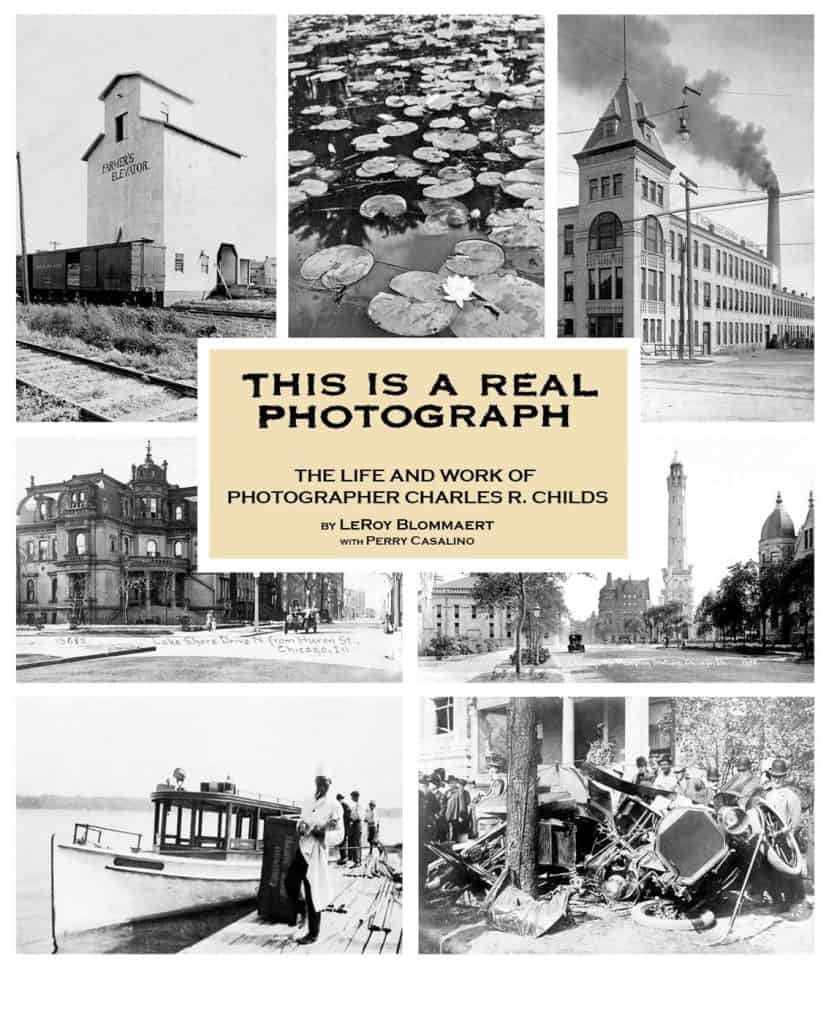
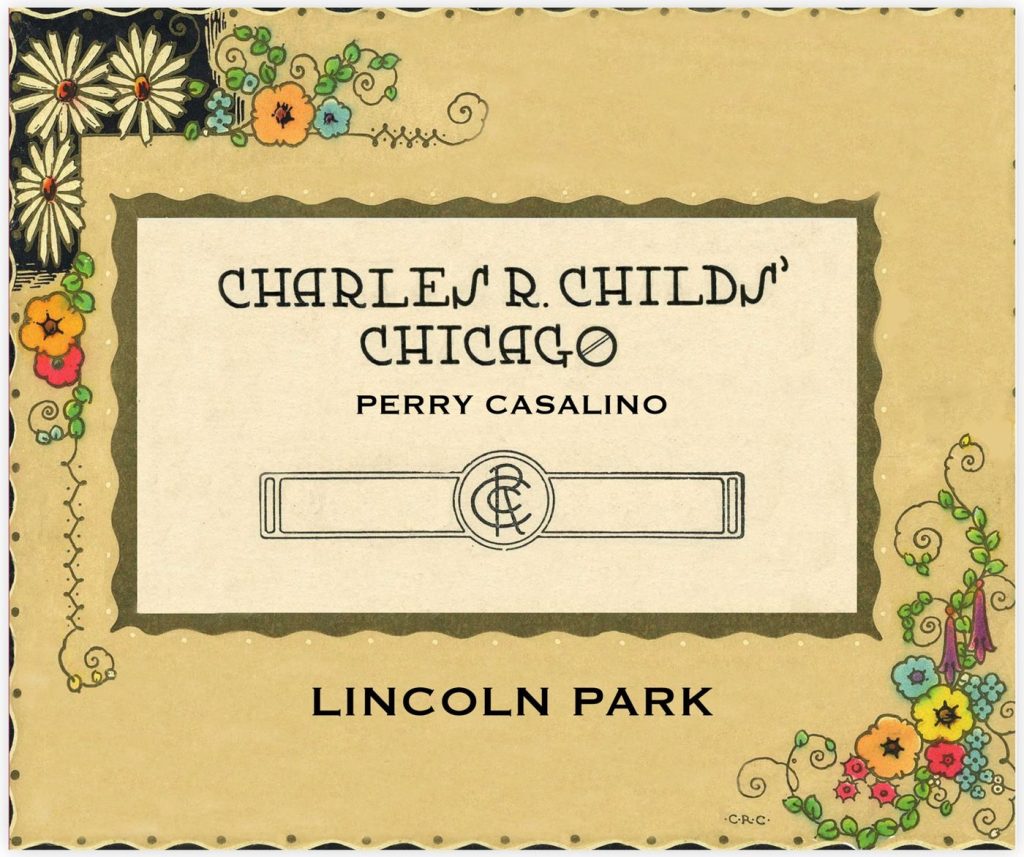
Fortunately, much of this remarkable period was documented through the lens of a photographer named Charles R. Childs.
Between 1907 and 1912, Childs produced more than 5,400 individual views of Chicago streetscapes for use as picture postcards. Over the course of his career, he took more than 30,000 photographs throughout the Midwest, reproducing many of those views as postcards through his studio.
Today, his photographs preserve a Chicago that is both familiar and remarkably different from the one we know. And sometimes, hidden within a century-old image, there is a story waiting to be discovered.
A Chicago That No Longer Exists
Childs documented Chicago’s rich architectural heritage in remarkable detail: neighborhood streets, homes, schools, churches, businesses, and the everyday life surrounding them. Many scenes have changed dramatically. Some buildings have disappeared, while others remain standing in neighborhoods transformed by time.
In his photographs, grand homes in affluent neighborhoods were often still new. The automobile had not yet taken over the streets, and captains of industry still lived close to downtown.
These images offer something a written history cannot provide on its own: the opportunity to stand, figuratively, on a Chicago street more than a hundred years ago and see what Childs saw.
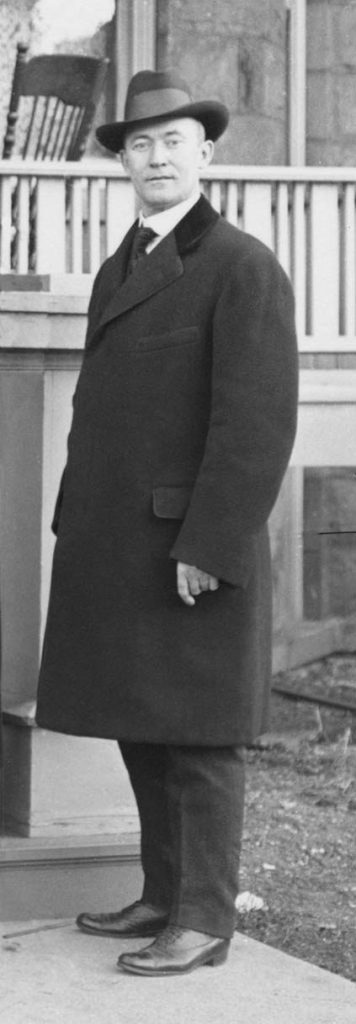
The Man Behind the Postcards
Childs was more than a photographer recording individual buildings. He operated a business that transformed photographic views into picture postcards and other printed materials, allowing his work to travel well beyond the streets where the images were made.
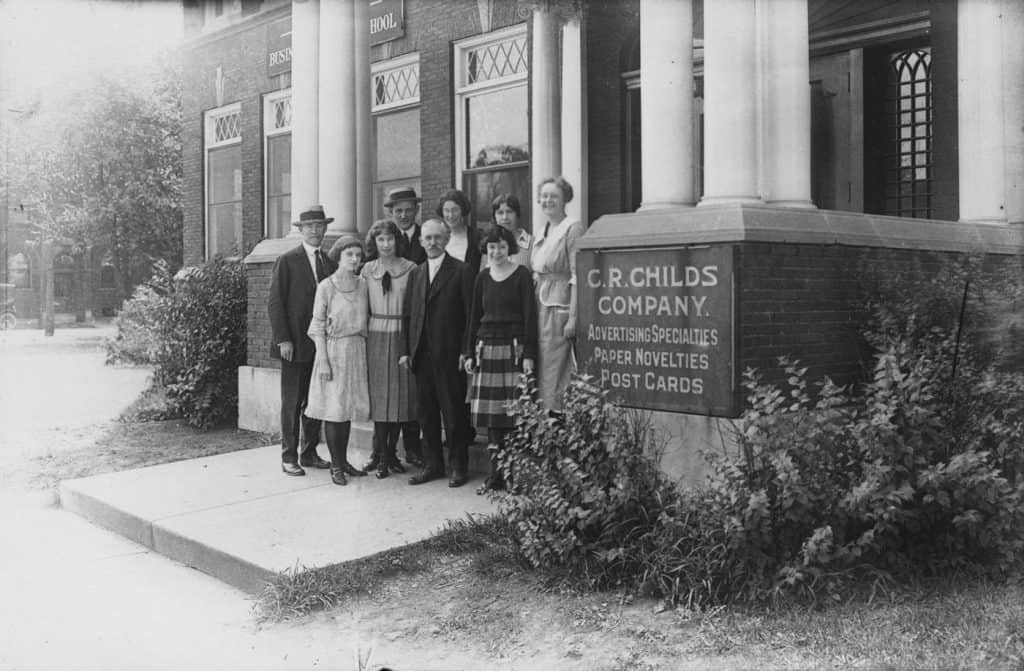
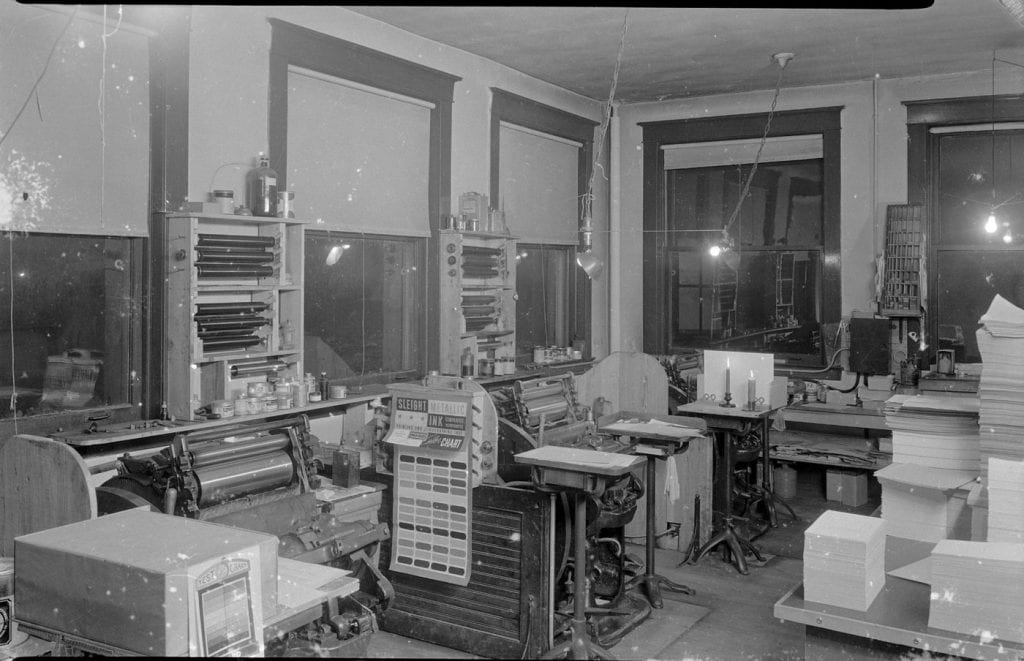
A surviving photograph of the C. R. Childs Company shows a group gathered outside its premises, beside signage advertising “Advertising Specialties,” “Paper Novelties,” and “Post Cards.” Another image captures the equipment and stacks of paper associated with the printing operation. Together, they reveal some of the work involved in making the postcards that collectors treasure today.
The Stories Hidden in the Details
Over the years, I have written a number of books documenting Chicago neighborhoods, many showcasing Childs’ work. One of the most rewarding parts of that research is discovering the stories behind the photographs.
When examining an image, I try to identify as much as possible. When was a building constructed? Who was its architect? Does it still stand today? What happened on that particular street?
Sometimes the answers are straightforward. Other times, they require considerable detective work. A storefront sign can identify a forgotten business. A distinctive facade can help establish a building’s history. And sometimes, an automobile parked along the curb becomes the most interesting detail in the entire photograph.
A License Plate Leads to a Discovery
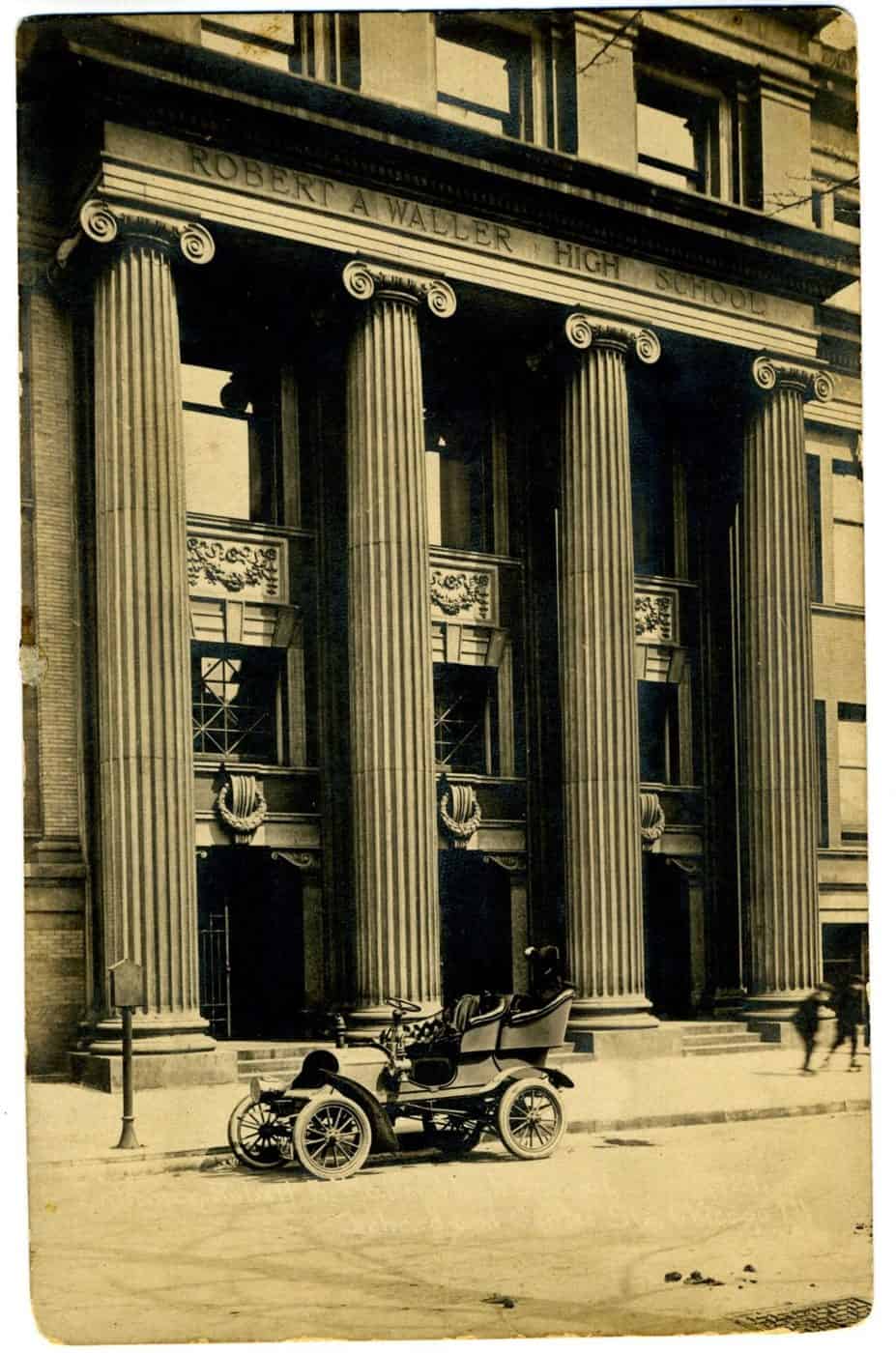
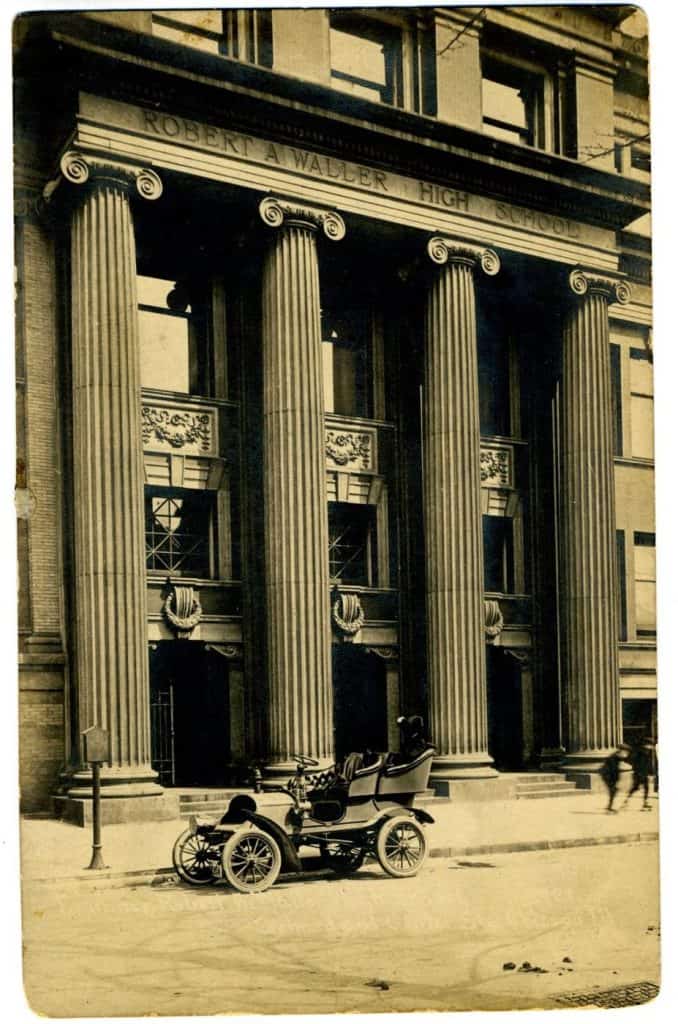
While researching one of my Chicago neighborhood books, I was studying a Childs photograph of the school known today as Lincoln Park High School. The building in the picture bears its earlier name, Robert A. Waller High School.
Parked directly in front of the school entrance was an early automobile. I wondered who owned it.
Fortunately, researchers have an unusual resource for answering questions like that: the historical List of Automobile Licenses, sometimes referred to as the “Wheel Book.” By matching a visible license number to a published registration, it is possible to identify an automobile’s registered owner.
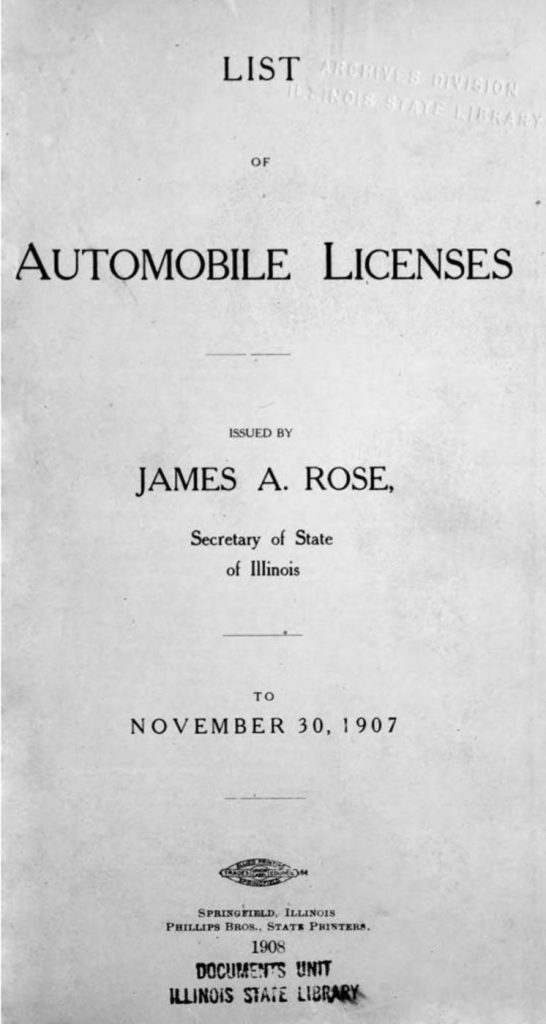
When I checked the registration, I was astonished. The listing identified Charles R. Childs of 2045 Clarendon Avenue, Chicago, as the owner of a Franklin automobile. The entry appeared under license number 8265.
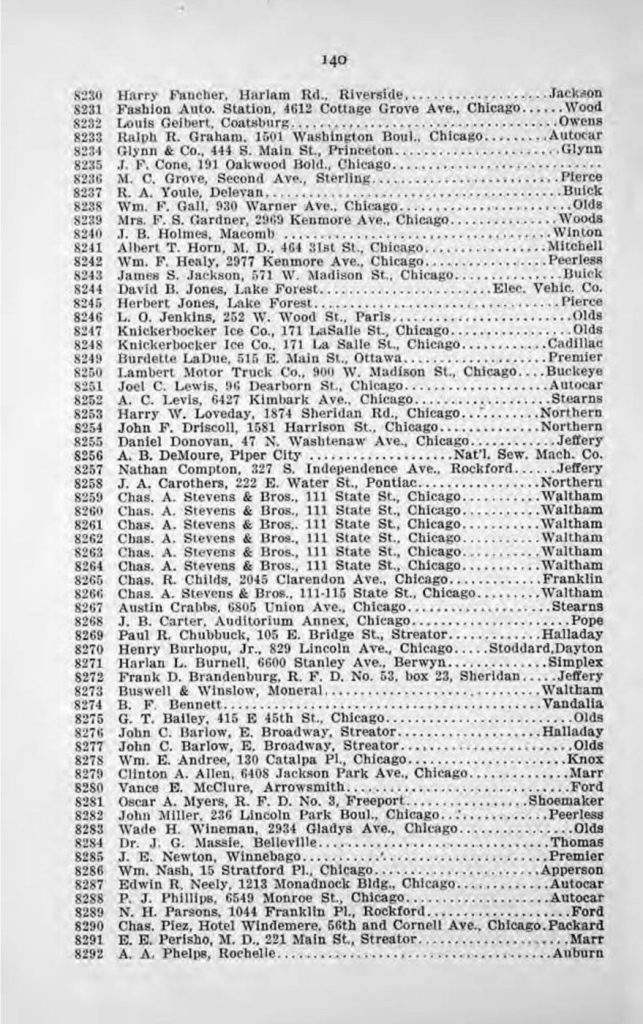
The car I had been researching belonged to the photographer himself.
There, in one of his own Chicago streetscapes, was Childs’ 1905 Franklin Type C automobile.
The Photographer Becomes Part of the Picture
We tend to think of historical photographers as invisible observers, standing behind the camera while recording the people, buildings, and streets of their time. We know their work, but rarely encounter such a personal trace of the person who made it.
That is what makes this small discovery so satisfying. For more than a century, the school photograph had preserved an ordinary Chicago scene. The building was the main subject, and the automobile appeared to be just another detail. A license plate, however, connected that detail directly to the photographer.
Perhaps Childs drove to the school specifically to photograph it. Perhaps he was documenting several nearby streets that day. The photograph does not tell us. What it does preserve is an unexpected link between the image and its creator.
Why Historical Postcards Matter
This is why I find historical postcards so compelling. At first glance, a postcard might seem like a simple picture of an old building or familiar street. Look more closely, and it becomes evidence of how a city lived and changed.
Architecture tells us how neighborhoods were built. Storefronts tell us how people conducted business. Streets reveal changing transportation. Even sidewalks, advertisements, and small details in the background can become valuable historical clues.
Picture postcards carried these images into homes and personal correspondence. Today, through the work of collectors, researchers, and historians, they continue to tell new stories.
More Than a Picture of the Past
The discovery of Childs’ automobile reminds us that historical research often begins with a simple question. One photograph leads to a detail. That detail leads to a record. And sometimes, the record reveals something no one expected.
What began as an effort to identify a car in front of a Chicago school became a personal connection to one of the city’s most prolific photographic chroniclers.
A postcard is never just a picture. It is a historical document, a fragment of someone’s personal history, and often a story that has yet to be told. All it takes is someone willing to look a little closer.
The Greater Chicago Postcard & Paper Show celebrates the history, artistry, and discovery found in vintage postcards and paper memorabilia.