
Louis Wain: The Artist Who Made Cats Famous, One Postcard at a Time
Long before cats ruled the internet, they ruled the postcard rack. One artist is largely responsible for that: Louis Wain, the English illustrator whose wide eyed, upright, endlessly expressive cats became one of the most collected postcard subjects of the early 1900s.
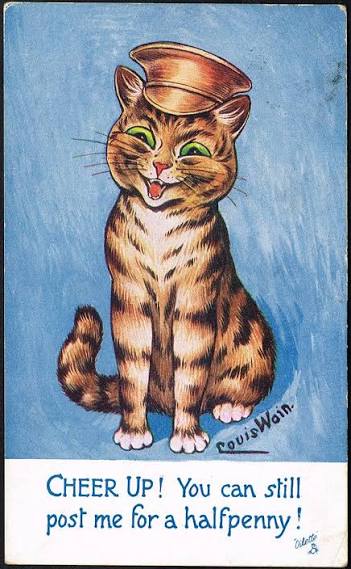
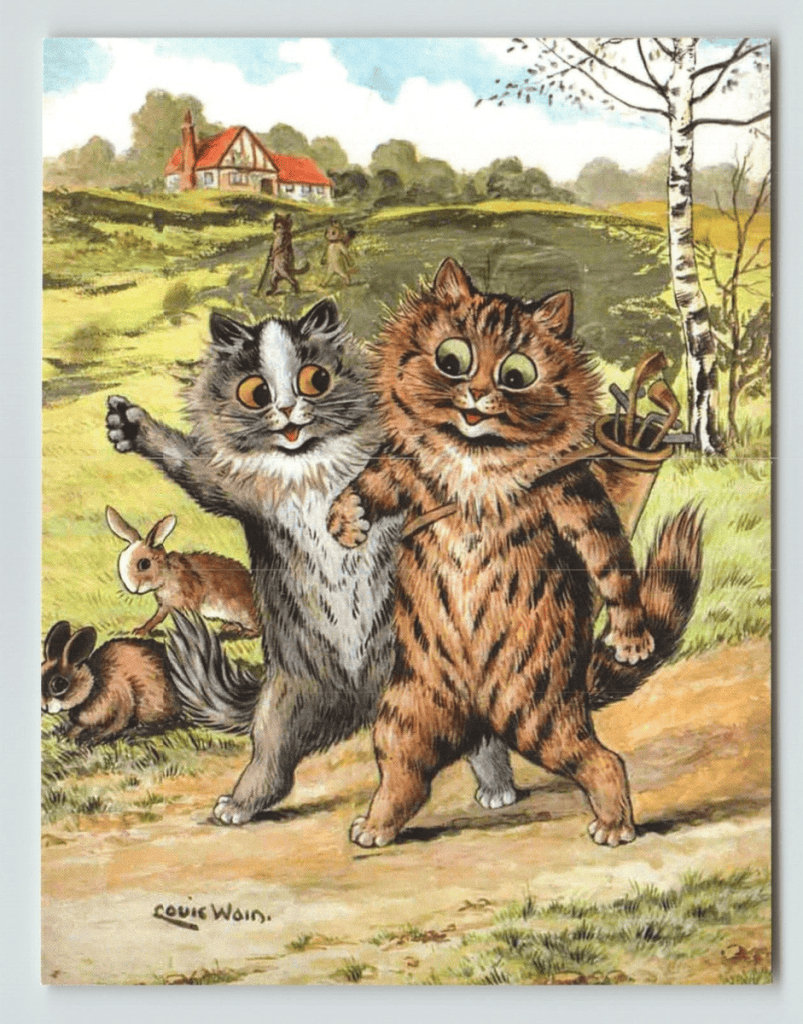
Wain started drawing cats in the 1880s, when the idea of a cat as anything other than a mouser was still fairly new. His cats stood on two legs, wore hats and monocles, played cards, and generally behaved like the neighbors. The public could not get enough. Publishers like Raphael Tuck and Sons printed his work by the thousands in their popular Oilette postcard series, and for a while Wain was one of the most reproduced artists in England. He was even named president of the National Cat Club, and writer H.G. Wells later credited him with changing how an entire nation felt about its house cats.
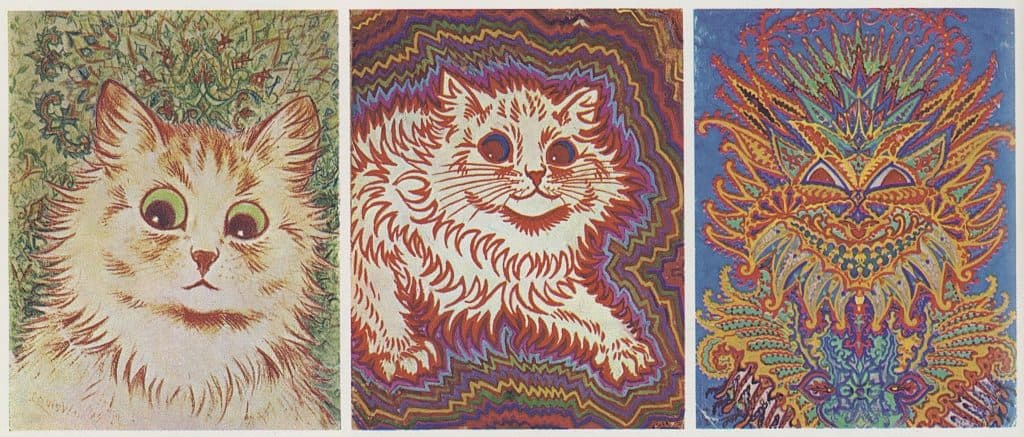
Wain’s own life grew harder as his career went on. After the deaths of his wife and several siblings, and years of financial strain, he was hospitalized for mental illness in 1924 and spent the rest of his life in institutional care, first at Bethlem and later at Napsbury Hospital, where he kept drawing cats until his death in 1939. His later work grew more abstract and pattern like, and for decades those pieces were arranged into a famous “progression” said to chart his declining mind. Modern researchers have pushed back on that tidy narrative, since the pieces were never reliably dated in order, but the later work remains stunning in its own right: kaleidoscopic, almost textile like cat faces built from tight, radiating pattern work.
A number of original Louis Wain postcards are part of the collection you will find at this year’s show, from cheerful holiday greetings to a wartime mascot card. Perry walks through a few of his favorites in the video below, and you can see the rest in person October 30 and 31 at the American Legion Hall in Franklin Park.
▶ Watch the video